

- Back
- 21 September 2026
How to Choose the Right Product for Your Next Installation
With so many protective films and coatings available, choosing the right product is not always as straightforward as it seems. One customer wants a cooler car, another is worried about smash-and-grab incidents, while someone else simply wants to keep a new vehicle looking newer for longer.
Although some products may appear similar once installed, they are designed to solve very different problems. The best choice will depend on the surface, the customer’s priorities and the type of finish they expect.
Here are a few practical points to consider before choosing a product for your next installation.
1. Find out what the customer really wants
Before discussing film shades, coating packages or technical specifications, ask the customer what they are hoping to achieve.
Are they concerned about heat inside their vehicle? Do they want to strengthen the windows? Are they trying to protect new paintwork from stone chips? Perhaps they want more privacy in their home or need to reduce glare in an office.
A few simple questions can quickly point you in the right direction:
- What is the main problem they want to solve?
- Where will the product be installed?
- Is protection or appearance more important?
- Do they want a subtle finish or a noticeable change?
- How is the vehicle or building used every day?
Someone looking for better car security solutions may benefit from smash and grab protection. A customer whose main concern is heat may need automotive window tint or a specialist heat shield film instead.
Starting with the customer’s real concern helps you recommend something useful, rather than simply offering the most popular product.
2. Choose a product made for the surface
Different surfaces need different types of protection. Automotive glass, windscreens, painted body panels and building windows all respond differently to heat, pressure and adhesives.
When working with vehicle windows, consider the shape of the glass, the preferred shade and the level of protection required. Smash and grab film can help hold broken glass together following an impact, while also providing tint and UV protection.
If the customer wants to reduce heat entering through the windscreen without making the glass noticeably darker, Heat Shield Film may be the better option.
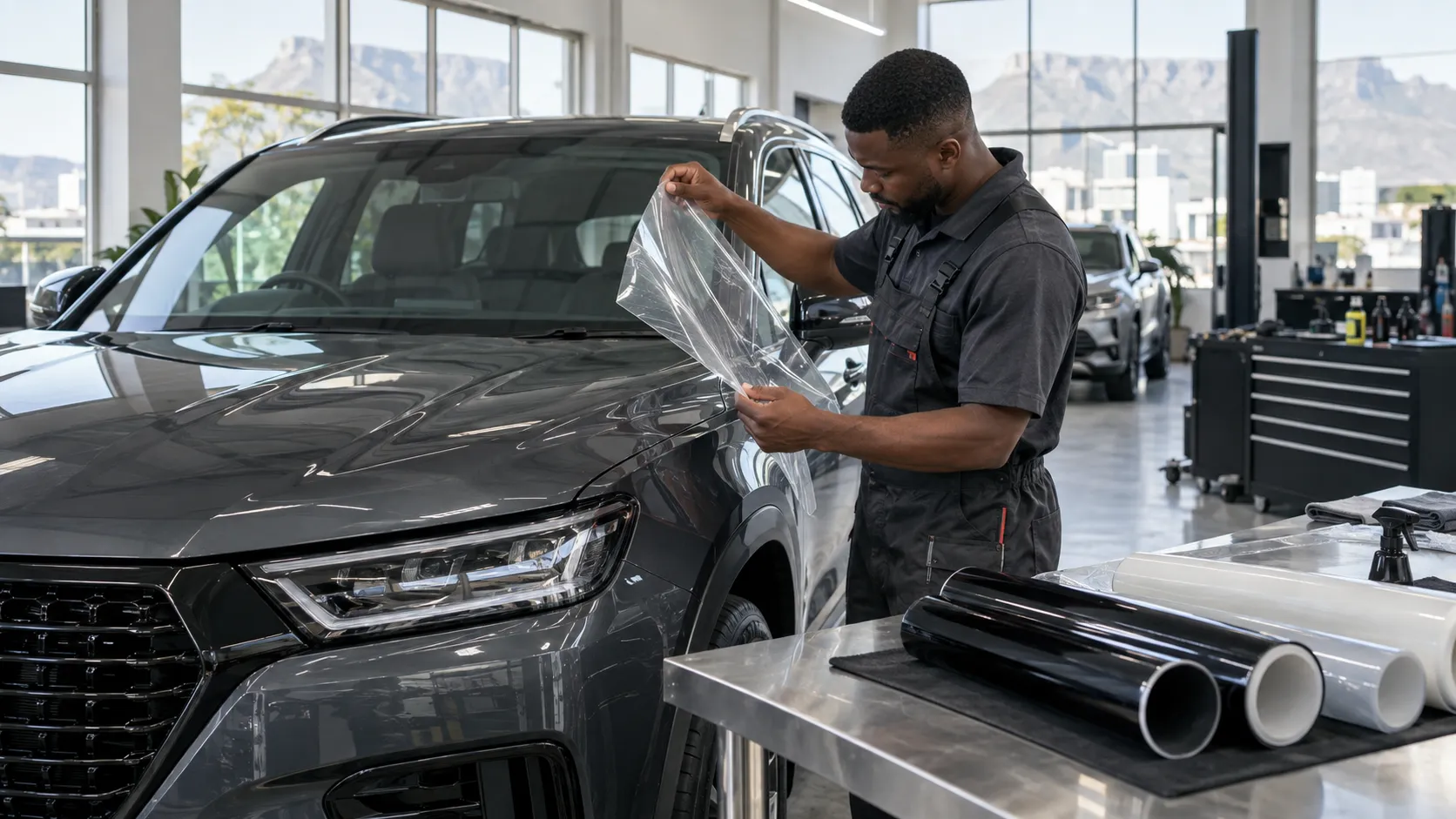
Paintwork requires a completely different solution. Paint protection film, also known as PPF, forms a physical layer over the vehicle’s paint. It is particularly useful on areas that take the most punishment, such as bonnets, bumpers, side mirrors and door edges.
The product should always suit the surface. Trying to make one film or coating do every job usually leads to disappointing results.
3. Understand the difference between PPF and coatings
Customers often ask whether paint protection film or ceramic coatings are better. Neither is automatically better than the other. They simply protect a vehicle in different ways.
PPF is a good choice when the customer wants protection against:
- Stone chips.
- Road debris.
- Light scratches.
- Marks on high-impact areas.
- Everyday damage to original paintwork.
Vehicle protective coatings are better suited to customers who want improved gloss, easier cleaning and a surface that repels water and dirt.
A professional ceramic coating can give paintwork a smooth, glossy finish and make regular maintenance more manageable. However, it does not offer the same physical impact protection as PPF.
For customers who want more complete protection, the two can work well together. PPF can be fitted to vulnerable areas, while a compatible coating can be applied to the rest of the vehicle.
4. Consider South Africa’s heat and sunlight
Heat and UV exposure are major concerns for vehicles, homes and commercial properties across South Africa. Cars parked outdoors can become extremely hot, while sunny rooms and glass-fronted offices often struggle with glare and uncomfortable indoor temperatures.
For vehicles, heat shield film can help reduce the amount of solar heat entering through the windscreen. It is ideal for customers who want a more comfortable drive without a dark windscreen tint.
When choosing window film for buildings, think about how the space is used. An office may need strong glare reduction so employees can work comfortably on screens. A showroom may need heat protection while still allowing plenty of natural light through the glass.
The same applies to window film for homes. A living room that receives harsh afternoon sun will have different needs from a bathroom where privacy is the main concern.
Darker and more reflective films are not always the best option. The right choice should balance heat reduction, natural light, privacy, UV protection and the appearance of the property.
5. Talk about the final appearance
Performance is important, but customers also care about how the finished installation will look.
Some vehicle owners prefer automotive window tint that closely resembles a factory finish. Others want something darker and more noticeable. With PPF, a customer may want to maintain the vehicle’s original gloss or use a matte film to change its appearance.
Architectural films can also affect the look of a property. Highly reflective film may work well on a modern commercial building, but it may not suit a residential home or heritage property.
Show customers samples where possible and explain how the product will look in different lighting conditions. A quick conversation before installation can prevent disappointment later.
6. Check the installation conditions
Even a high-quality product can fail if the surface is poorly prepared or the installation conditions are unsuitable.
Before starting, check:
- The age and condition of the paint or glass.
- Whether an old film or coating must be removed.
- Whether the surface has wax, polish, dust or other contamination.
- Which fitting tools and preparation products are required.
- How long the product needs to cure.
- What aftercare advice the customer should receive.
Clean preparation is especially important when applying PPF and ceramic coatings. Dust, residue or moisture trapped beneath the product can affect both its appearance and performance.
For architectural installations, accurate measurements and a proper assessment of the glass are just as important.
Make the right choice from the start
The right product is not necessarily the darkest film, the thickest PPF or the most advanced coating. It is the option that suits the surface, solves the customer’s problem and provides the finish they expect.
Apex Auto Shield supplies professional installers and fitment centres throughout Southern Africa, with fully stocked warehouses in Johannesburg and Cape Town. The range includes automotive window tint, smash and grab protection, paint protection film, heat shield film, UV protection film and professional vehicle protective coatings.
For more information visit our website: https://apexautoshield.co.za/
Follow us on Facebook: https://www.facebook.com/apexautoshield
Share to: